

TRANSYLVANIA CONCRETE COATINGS
Basement Floor Coatings in South Jersey
Receive a Free Quote!
Residential
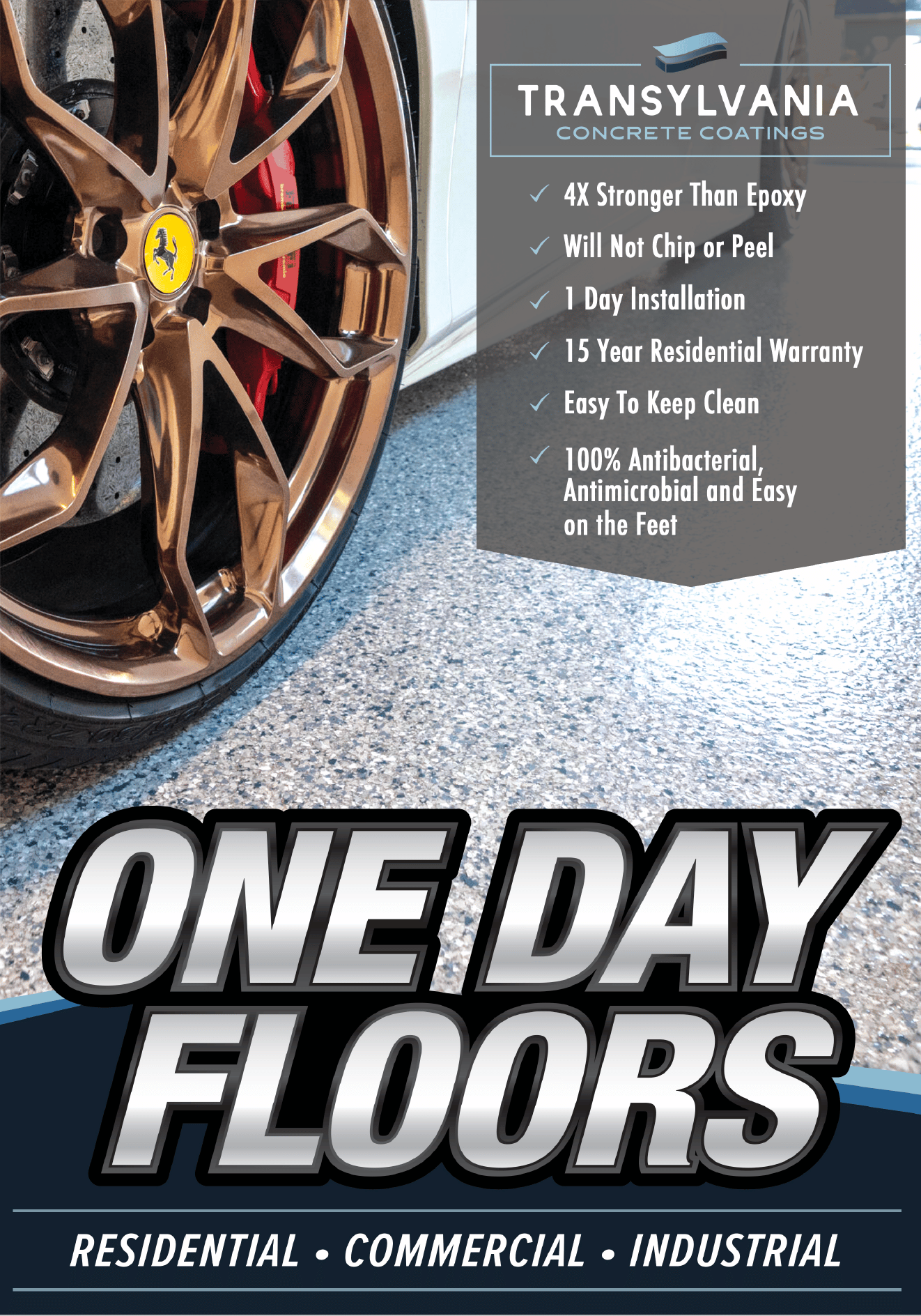
Residential Floor Coatings
From basements to pool decks, our wide-ranging selection of floor coatings guarantees the right look and functionality for any space.
Save on your next Garage Floor Coating Project
Call or Click today to take advantage of seasonal savings on your next garage floor project!
Transylvania Concrete Coatings
Durable, Moisture-Resistant Basement Floors for NJ Homes
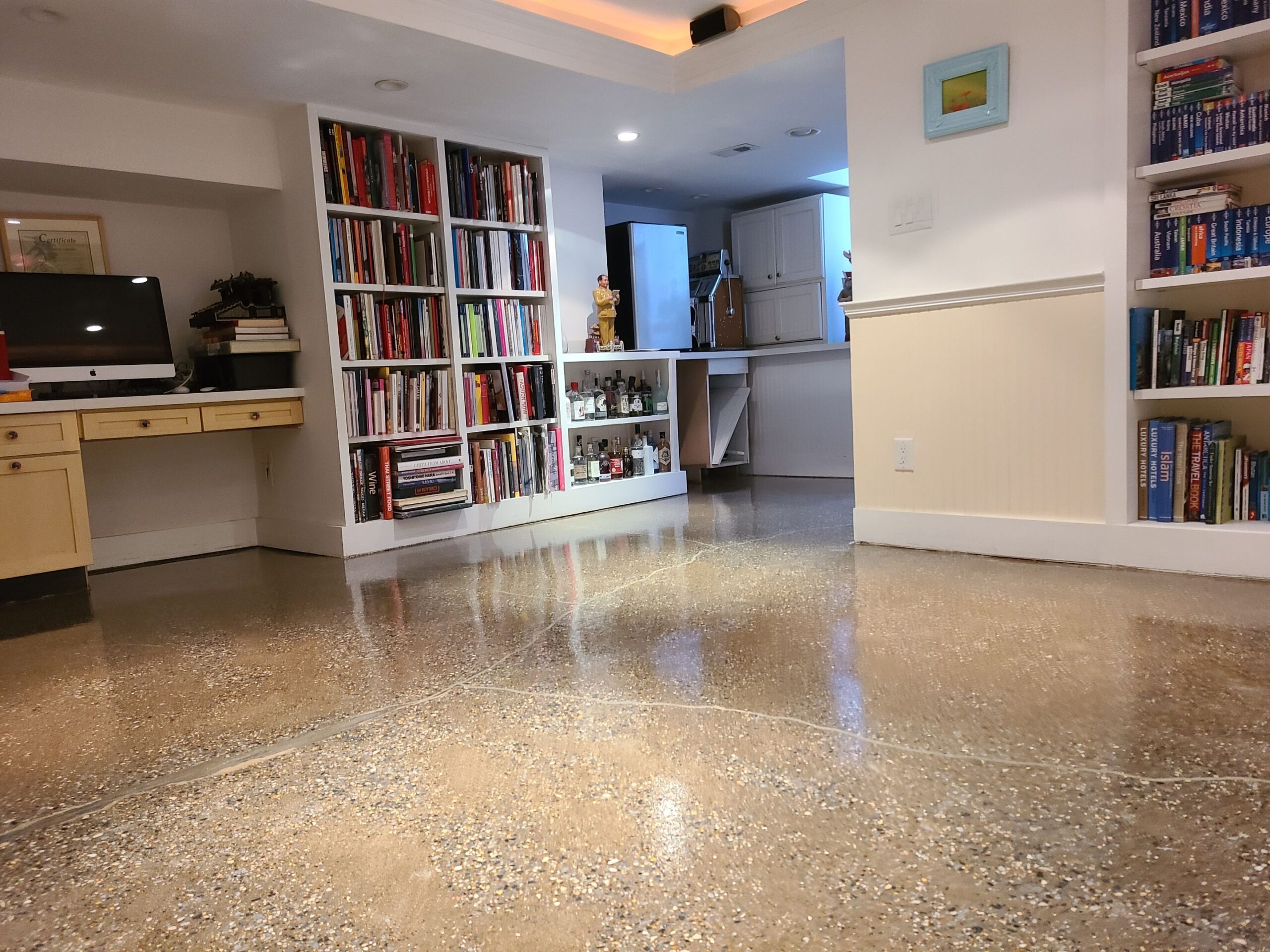
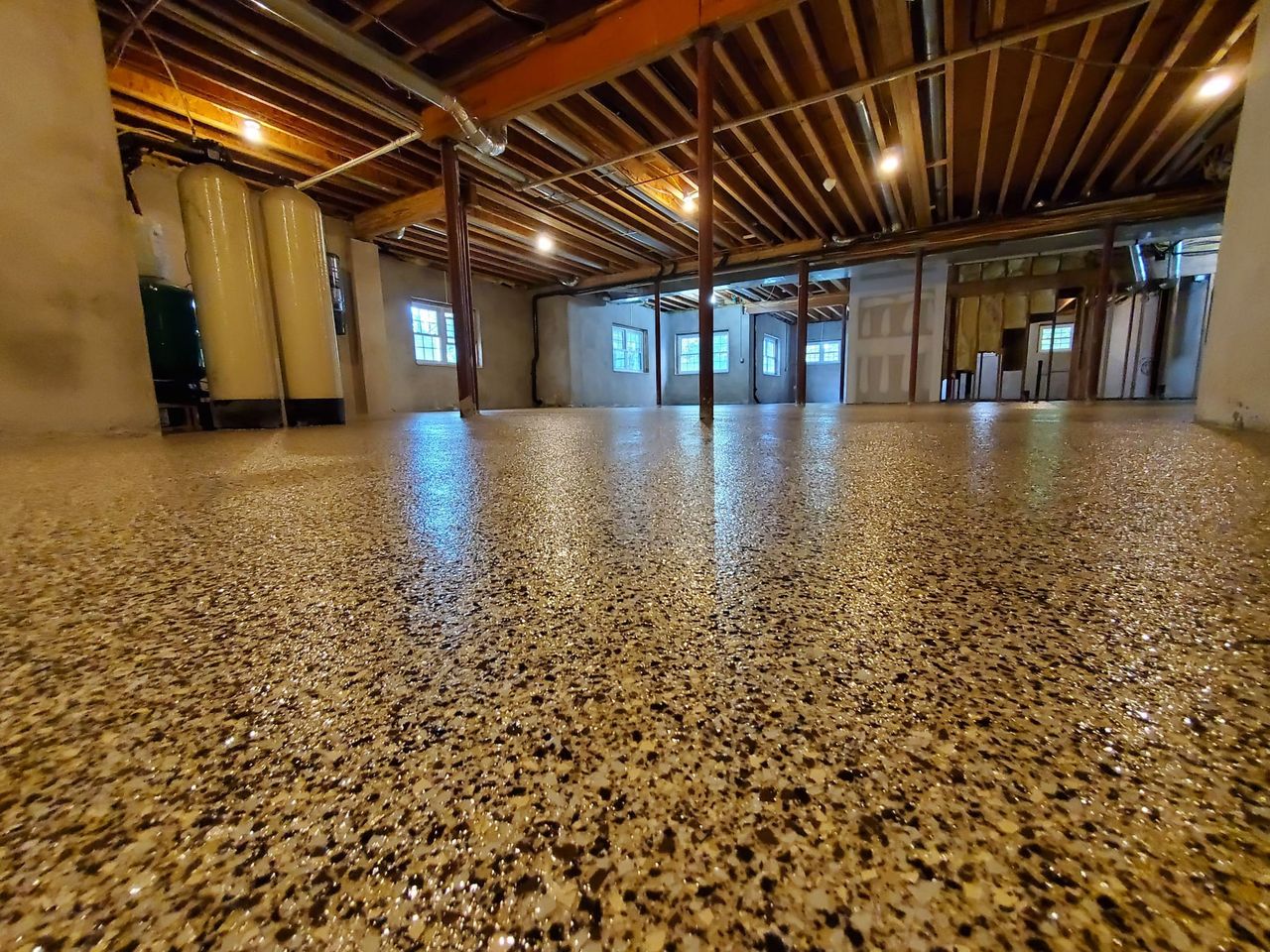
Cracked, damp, dusty concrete. Peeling paint from a DIY kit that never really bonded. If that’s what your basement floor looks like right now, it’s not unusual — bare basement slabs take on moisture in ways a garage floor never has to deal with, and most coatings aren’t built for it. We install basement floor coatings throughout South Jersey, from a moisture-tested, properly prepped slab to a sealed, finished floor. Done right, it’s the difference between a floor that peels in two years and one that holds up for decades.
Why Basements Need a Specialized Coating
A basement floor isn’t a garage floor with less sunlight. It’s below grade, it sits against soil that holds moisture year-round, and that changes what actually works on it.
Moisture, Humidity & Vapor Transmission: Concrete is porous. Moisture vapor moves up through the slab from the soil below, and humidity in the air condenses against a cold basement floor. Standard paint and big-box DIY epoxy kits fail here specifically because they bond to a slab that’s still moving moisture — the coating can’t breathe, moisture gets trapped underneath, and it peels or bubbles. This is the single biggest reason basement coating jobs fail, and it’s the first thing we test for, not an afterthought.
Efflorescence, Hydrostatic Pressure & Below-Grade Slabs: If you’ve seen a white, chalky powder bloom on your basement floor or walls, that’s efflorescence — a visible symptom of moisture moving through the concrete and leaving mineral deposits behind as it evaporates. Hydrostatic pressure is the underlying cause in many cases: water-saturated soil around a below-grade slab pushes moisture through the concrete and up through the cove joint where the floor meets the wall. A coating is only as good as the slab it bonds to — if the moisture problem isn’t addressed first, no coating on the market will hold.
Mold & Mildew Resistance: A seamless, non-porous coated surface leaves nowhere for growth to take hold the way a porous, uncoated slab can, and it’s easy to keep clean with regular sweeping and mopping
Epoxy vs. Polyurea/Polyaspartic vs. FlexStone for Basements
Most homeowners searching for basement flooring start with the word “epoxy” — it’s become the generic term for floor coatings, the way “Kleenex” gets used for tissue. But epoxy, polyurea/polyaspartic systems, and FlexStone aren’t the same thing, and the differences matter in a below-grade space.
Epoxy cures rigid, which can make it more susceptible to cracking or delaminating as a basement slab moves with changes in temperature and moisture. It’s also not UV-stable, so it can yellow over time when exposed to sunlight. While epoxy can create a durable, attractive finish, its performance depends heavily on the specific system and installation.
Polyurea/polyaspartic systems offer a more flexible alternative. They cure quickly, provide strong adhesion and durability, and are UV-stable, making them less prone to yellowing. Their flexibility helps them better accommodate the natural movement of a concrete slab, making them a stronger choice for demanding basement environments.
FlexStone takes basement flooring a step further by combining the performance homeowners want with a more comfortable, finished feel underfoot. Its cushioned, permeable design helps manage moisture while providing a slip-resistant surface that’s safer for kids, pets, and everyday use. It’s also crack-resistant, UV-stable, and built for all-weather performance — giving you a durable surface that can turn an unfinished or underused basement into a more comfortable, usable part of the home.
Why We Use a Penntek Polyurea/Polyaspartic or Rubber Stone System
Transylvania Concrete Coatings uses different flooring systems depending on the space and the performance homeowners need.
For our coating systems, we install a Penntek-certified polyurea basecoat with a polyaspartic topcoat — not traditional epoxy. The polyurea basecoat bonds to properly prepared concrete and carries the color and decorative flake, while the polyaspartic topcoat seals the system and provides the wear layer. This chemistry is designed for demanding environments, offering flexibility, durability, UV stability, and a fast curing process that allows many floors to be completed in a single day.
For FlexStone, we use a Rubber Stone system that combines decorative stone aggregate with a flexible rubber-based binder. The result is a cushioned, slip-resistant surface with a permeable design that helps manage water while providing all-weather durability. It’s also crack-resistant and more comfortable underfoot, making it especially well suited to spaces where safety, comfort, and moisture management matter.
“One Day” Done Right: Why Surface Prep Matters More Than the Calendar
You may have come across claims — some of them from large national coating networks — that a one-day install means a thinner, direct-to-concrete polyaspartic system that fails under hydrostatic pressure, then hides behind a “moisture-related” warranty exclusion when it does. It’s a fair concern to raise, and worth answering directly instead of ignoring it.
We finish most basements in a day because polyaspartic cures fast — not because we skip anything to hit a deadline. Every slab is moisture-tested before a single drop of product goes down. Diamond grinding creates the surface profile the coating needs to actually bond. Cracks and spalls are repaired, and where moisture readings call for it, a mitigation primer goes down before the basecoat. The one-day timeline is what the chemistry allows once prep is done correctly; it was never a substitute for it.
Our Basement Floor Coating Process
Polyurea-Polyaspartic
Test and Prepare the Surface: Every slab starts with moisture testing per ASTM F2659 using a Tramex CMEX5 meter. We then diamond-grind the concrete to create the proper surface profile and repair any cracks, spalls, or other defects. If moisture readings call for it, we apply a moisture-mitigation primer before moving forward — this step is never skipped to save time.
Build the Floor System: Once the slab is properly prepared, the Penntek polyurea basecoat is applied. Decorative chip is then broadcast into the wet basecoat to create the desired finish and add texture and visual depth.
Seal and Return to Service: A clear polyaspartic topcoat is applied to seal the system, protect the decorative flake, and provide the finished wear surface. Most basements are walkable within hours and ready for normal use the next day.
FlexStone
Surface Preparation & Refinement: We deep-clean and mechanically prepare the surface, repairing imperfections, removing contaminants and coatings to create the ideal foundation for long-term adhesion and performance.
Binder, Primer & Stone Installation: A high-performance bonding system is applied, followed by the FlexStone/FlexPave rubber stone system, hand-troweled for a seamless, permeable, slip-resistant finish engineered for both beauty and performance.
Cure and Set: The system cures into a flexible, durable surface built to withstand weather, wear, and daily use while maintaining long-term comfort, traction, and visual appeal—without the need for a topcoat.
Every step here ties back to the same principle: the coating is only as reliable as the moisture work and prep underneath it. That’s true whether the job takes one day or five.
Basement Floor Ideas: Colors, Flakes & Finishes
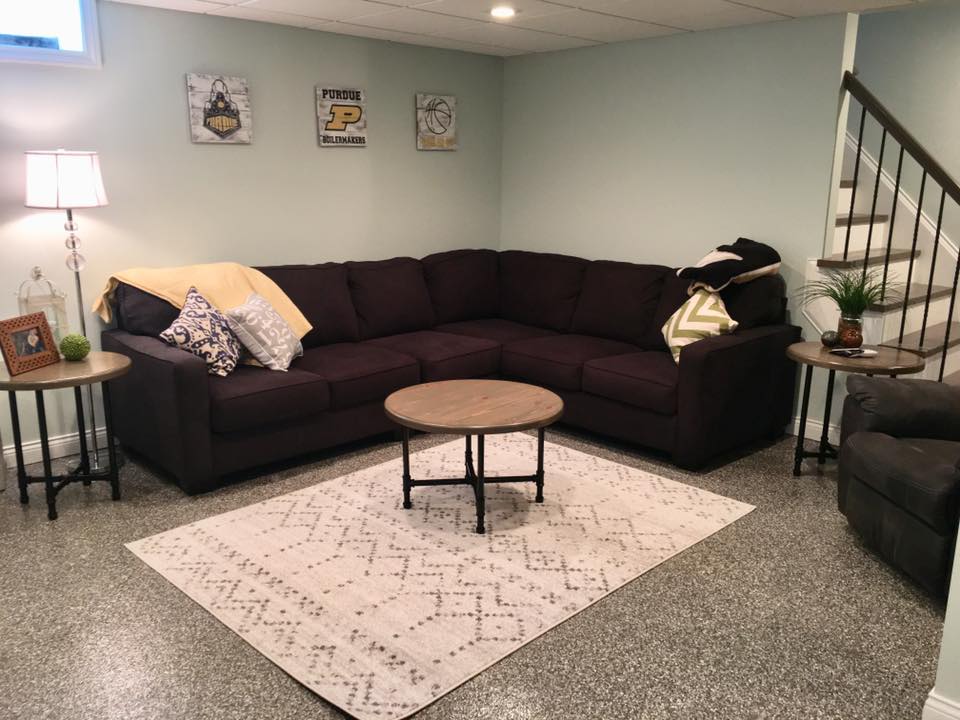
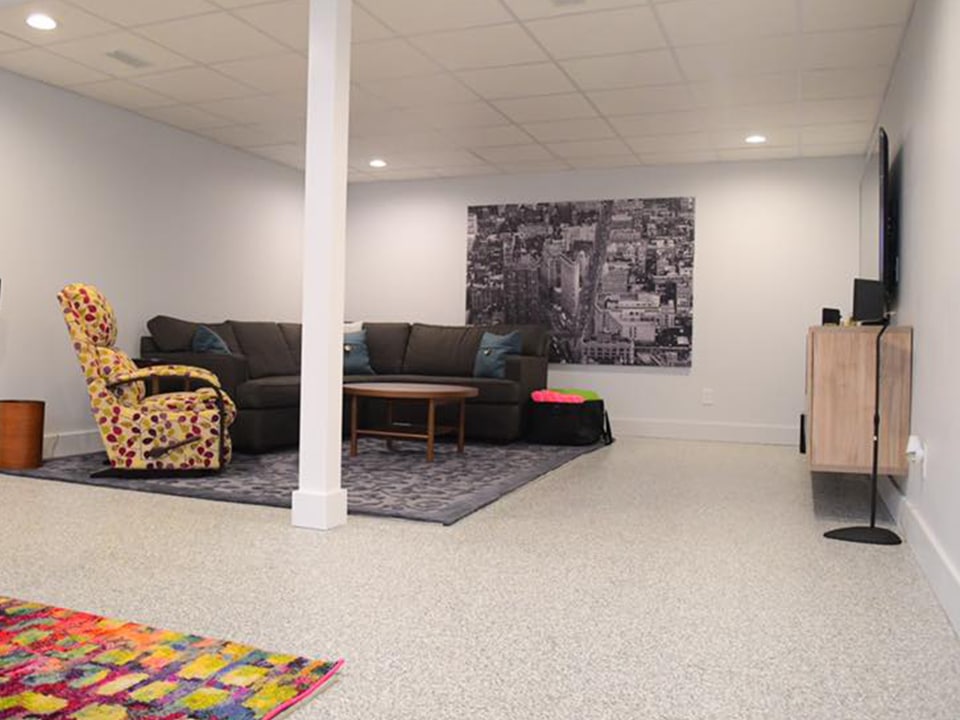
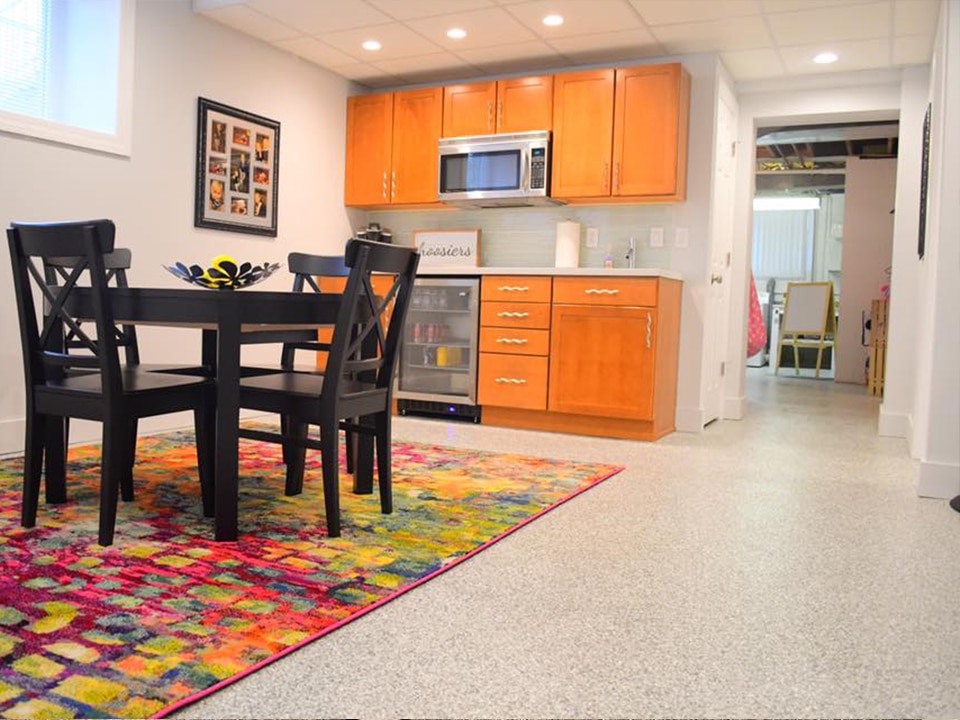
Once the slab is sealed, the finish is where you get to make the space your own. Flake and chip systems broadcast color into the basecoat for a textured, speckled look that also hides minor slab imperfections. Solid color finishes give a clean, uniform look that works well in a basement used as a home office or playroom. Metallic finishes create a marbled, high-end look for basements finished as a lounge, bar, or gym space.
FlexStone offers a more natural, dimensional finish, using decorative stone aggregate to create the look of a beautiful stone surface. Available in a range of color combinations, FlexStone can complement everything from warm, cozy basement retreats to modern entertainment spaces. The varied stone texture also creates visual depth and character, giving the floor a more organic look than a traditional solid or flake finish.
Service Area — Gloucester, Camden & Salem Counties
Transylvania Concrete Coatings installs basement floor coatings throughout South Jersey, based out of Blackwood in Gloucester County.
Turnersville, Washington Township, Sewell & Sicklerville - These Gloucester County communities are some of the areas where we see the most consistent basement coating demand
We also install throughout Camden County, including Cherry Hill and Haddonfield, plus surrounding Salem County communities. Don’t see your town listed? Call and ask — we may still serve your area.
Frequently Asked Questions
Most homeowners use “epoxy” as a catch-all term for any floor coating. What we actually install is Chip Evolution: a polyurea basecoat with a polyaspartic topcoat, which provides a durable, seamless finish and handles basement-level moisture better than traditional epoxy. For homeowners looking for a softer, more comfortable surface, FlexStone is another option. Its cushioned, slip-resistant rubber surface provides flexibility and all-weather performance, making it a great choice for basements and other areas where comfort and traction are priorities.
The one caveat: any flooring system, ours included, requires the moisture level to be tested and addressed first. A floor installed over an untested or improperly prepared surface is more likely to fail.
Not if it’s installed correctly. The risk is real when a coating goes down over a surface that hasn’t been tested or prepped — that’s exactly the scenario that leads to peeling and bubbling. We test every surface for moisture before coating.
A coated floor doesn’t give mold and mildew the same foothold that uncoated concrete does, and it’s easy to keep clean. Our Chip Evolution System is also antimicrobial, making it a family-friendly flooring option that’s safe for kids. It isn’t a mold remediation service or a medical claim — if you have an active mold issue, that needs to be addressed separately.
That’s efflorescence — a mineral deposit left behind as moisture moves through the concrete and evaporates. It’s a visible sign of moisture movement, which is exactly what we test for before coating.
Durability comes down to two things: how well the surface was prepped and tested before coating, and how much moisture the surface deals with over time. A floor installed without proper moisture testing or prep is the kind that fails early — one installed the right way is built to hold up over the long term.
In most cases, yes — our systems cure fast enough to make a one-day install realistic. But the timeline is a result of the chemistry, not a shortcut on prep.
Both the Chip Evolution System and FlexStone are designed with slip-resistant surfaces, making them safer choices for areas where floors may get wet.
No matter what look or style you are going for, Transylvania Concrete Coatings has a floor coating solution to match your design aesthetic no matter what look or style you are going for. With hundreds of combinations of colors and designs to choose from, homeowners get exactly what they want with high-quality, guaranteed floor finishes from Transylvania Concrete Coatings.
Get a Free Basement Floor Coating Estimate
Don’t delay getting a basement floor that adds value and function to your home! Contact Transylvania Concrete Coatings today to schedule a free, no-obligation estimate for our basement floor coating services. Give us a call at 856-212-1250.
Receive a Free Quote!
Residential
Residential Floor Coatings
From basements to pool decks, our wide-ranging selection of floor coatings guarantees the right look and functionality for any space.
Save on your next Garage Floor Coating Project
Call or Click today to take advantage of seasonal savings on your next garage floor project!